
Birth Control Methods
Basal Body Temperature Method
How it works
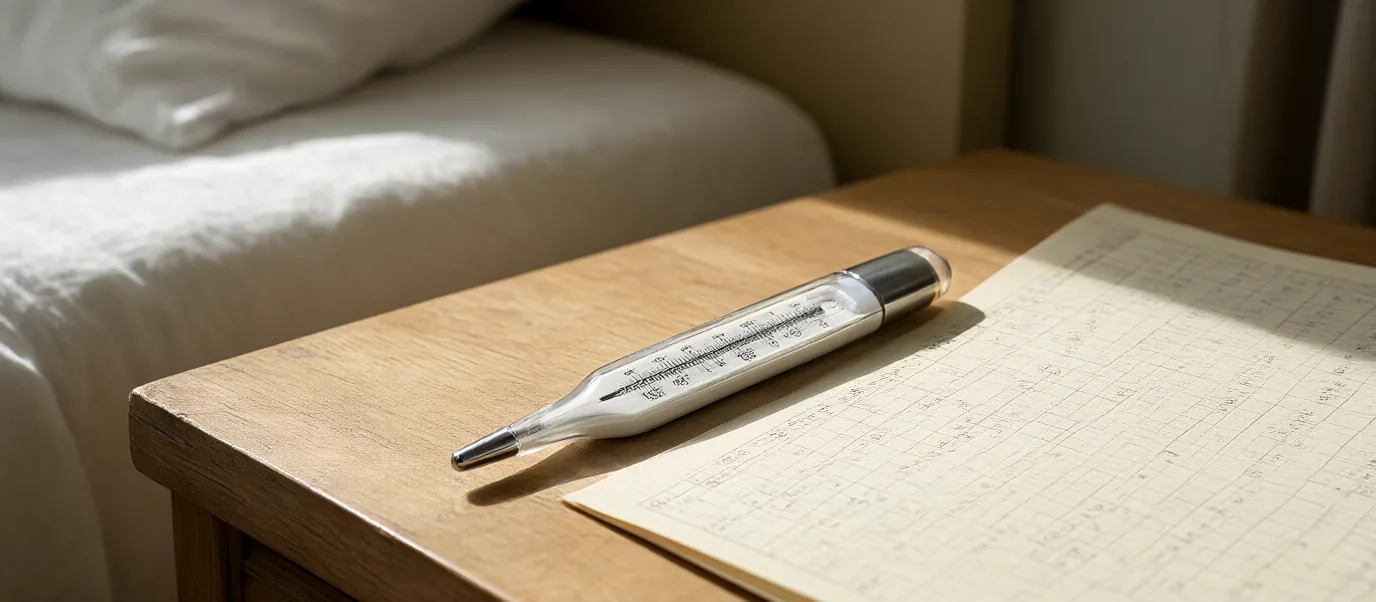
Before ovulation, basal temperature is usually between 35.5 and 36.6 °C. After ovulation, progesterone raises it by 0.2–0.5 °C. If the rise lasts for 3 days in a row, ovulation is considered to have occurred. The fertile days are the days before ovulation. The temperature rise shows this only in hindsight. For this reason, the method works on the basis of “ovulation has happened, so it is now safe.” The days before that are risky.
Measuring rules
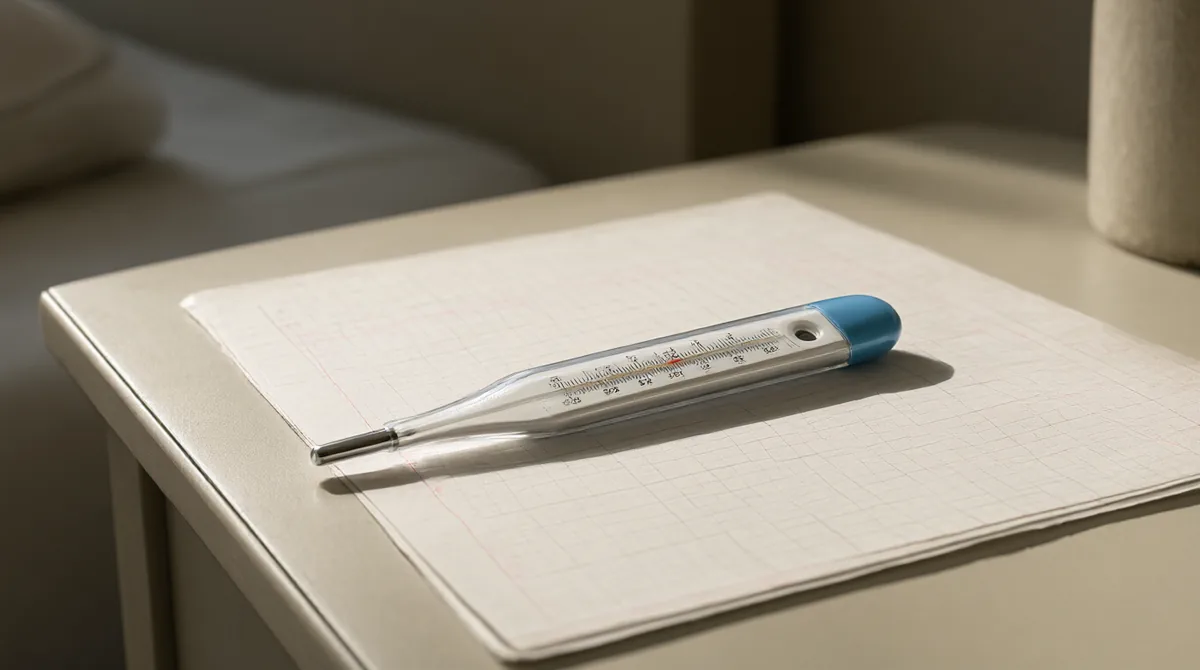
- A special basal thermometer is used (accurate to a decimal place).
- Measure at the same time every morning, before getting out of bed, after at least 3 hours of uninterrupted sleep.
- Oral, vaginal or rectal measurement can be chosen. Always use the same site.
- Do not talk, drink, eat or move around before measuring.
- Record the results on a chart or in an app.
- The method cannot be relied on until at least 3 cycles have been recorded.
Things that affect the reading:
- Fever or illness
- Alcohol
- Lack of sleep or shift work
- Travel and time zone changes
- Stress
- Some medicines
In these situations, a temperature rise may be misleading. At SoftCare, your records are reviewed and their reliability is assessed.
The fertile window
The temperature rise happens after ovulation. Sperm live for up to 5 days. For this reason, the safe period begins 3–4 days after the temperature rise starts. From the start of your period until the 3rd day after the temperature rise, sex is avoided or condoms are used. This window is not narrower than with the calendar method; the margin of error is still high.
Effectiveness
With typical use, the basal body temperature method on its own has a first-year pregnancy rate of about 15–25%. Even with perfect use it is limited, because the rise is only seen in hindsight and measurement errors are common. The symptothermal method (basal temperature + cervical mucus) is more effective. Even so, it is far less effective than LARC methods (below 1%). At SoftCare, the basal temperature method on its own is not recommended.
100 women, 1 year: pregnancies by method
Loading…
Limitations
- The temperature rise happens after ovulation. The days before are risky.
- Reliability drops with irregular periods.
- It requires daily discipline. Forgetting or measuring late causes errors.
- Illness, stress and alcohol distort the reading.
- It does not protect against STIs.
- It is not reliable during breastfeeding or perimenopause.
Because of these limitations, at SoftCare the method is not discussed as protection on its own. It can be used to learn about fertility or to plan a pregnancy.
Who it can be discussed with
- Those who want to learn about their fertility cycle
- Those planning a pregnancy
- Those who do not want to use hormones and can keep daily records
- Those who will use it together with the symptothermal method
Who it is not suitable for:
- Those with irregular periods
- Shift workers
- Those who are breastfeeding
- Those who absolutely want to avoid an unintended pregnancy
- Those at high risk of STIs
At SoftCare, LARC or condoms are discussed directly with these patients.
STI protection and emergency contraception
The method does not protect against STIs. A condom should be added. If unprotected sex happens on a fertile day, emergency contraception is explained. The levonorgestrel pill can be used within 72 hours, ulipristal acetate within 120 hours, and a copper, gold or hormonal IUD within 5 days. At SoftCare, these options are discussed in advance.
Emergency contraception: options by hours since intercourse
Loading…
More effective alternatives
At SoftCare, these options take priority over basal body temperature:
- Gold IUD: Hormone-free, 5 years, no risk of forgetting.
- Hormonal IUD: For heavy bleeding.
- Contraceptive implant: 3 years.
- Condom: STI protection.
- Symptothermal method: Basal temperature + mucus. Even so, it is not as effective as LARC.
For patients who want to learn about their fertility, the combination of basal temperature and mucus can be explained. Temperature alone is not recommended.
Compare methods
Loading…
Our approach at SoftCare
At SoftCare Clinic, the basal body temperature method is discussed with patients who want to learn about their fertility. It is not recommended as a contraceptive method on its own. You are taught the measuring rules. Records for at least 3 cycles are requested. Their reliability is assessed. The gold IUD is our first recommendation. If a patient still wants to use the method, written information is given on its low effectiveness, measurement errors and emergency contraception options. Adding a condom is recommended. If there is an STI risk, testing is planned.
Appointments: +90 212 241 30 10 · softcareclinic.com
References
- 1. Mayo Clinic. Basal body temperature for natural family planning.
- 2. Cleveland Clinic. Basal Body Temperature.
- 3. Planned Parenthood. Temperature method.
- 4. Trussell J. Contraceptive failure in the United States. Contraception. 2011;83(5):397–404.
- 5. World Health Organization (WHO). Family planning/contraception methods.
- 6. T.C. Sağlık Bakanlığı. Gebeliği Önleyici Yöntemler.
- Note: Effectiveness rates and measuring rules are updated by the physician in line with current guidelines. At SoftCare, basal body temperature on its own is not recommended; the gold IUD and other LARC methods take priority. This reference list is for information purposes.
A citation does not mean that SoftCare wrote that text.
Medically reviewed by Op. Dr. Şükrü Sanus, Obstetrician & Gynecologist · Last medical review: