
Gynecological Exams / Tests
Bleeding After Sex

It is not the same as a period
A period comes from inside the womb on the expected day of the cycle. Bleeding after sex follows contact and is usually light and short. If the two fall in the same week, a woman may say “my period came early”. The calendar and an examination tell them apart. If bleeding between periods also happens without sex, the problem is not only the surface of the cervix. The lining of the womb, polyps, fibroids and hormones then come into the picture.
Bleeding after sex is not rare in the general population. The Australian screening guideline, pooling eight studies, gives a point prevalence of roughly 0.7% to 9%. This range does not mean “it is normal, no need to look”. In persistent abnormal bleeding, cervical cancer is ruled out.
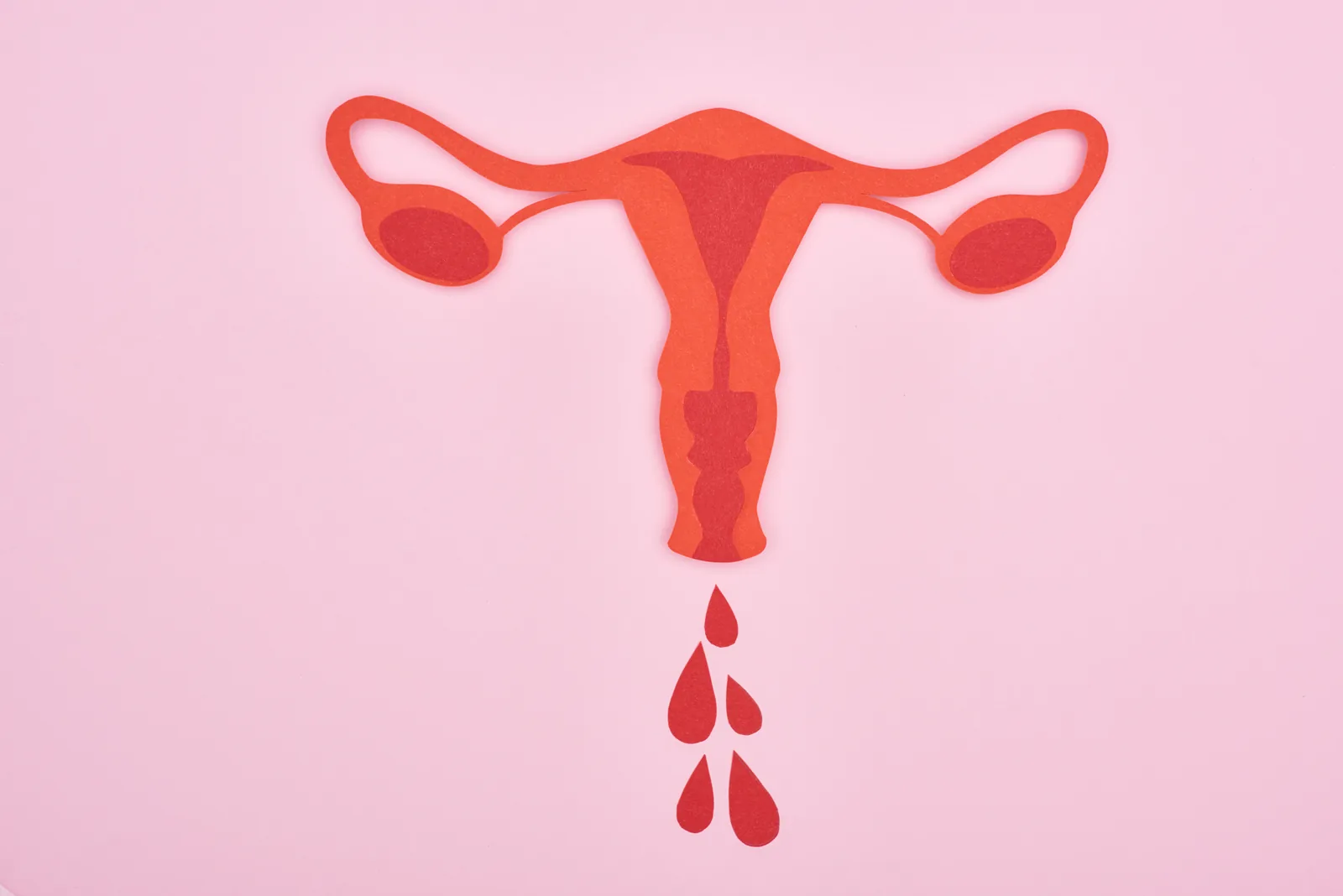
Where it comes from
| Finding | What it suggests |
|---|---|
| Cervix turned outward, bleeds easily | Ectropion; common in young women and those on the pill |
| Discharge, easy bleeding | Cervicitis; chlamydia and gonorrhoea are tested for |
| Red growth on a stalk | Cervical or endometrial polyp |
| Dryness, menopause, breastfeeding | Friction; atrophy |
| Pregnant, spotting | Threatened miscarriage, ectopic pregnancy, placenta |
| Visible ulcer, bad smell, recurrence | Colposcopy is not delayed |
| Bleeding between periods without sex too | The inside of the womb is assessed separately |
Ectropion means the inner lining of the cervical canal faces outward. It bleeds when touched. It is not cancer. Cautery is not prescribed for every ectropion. If infection is ruled out and the smear is clear, it can be monitored. A polyp is not written off as “irritation” without being removed. A small polyp may be seen on examination; if its stalk is inside the womb, ultrasound or hysteroscopy is discussed.
Pregnancy is ruled out first
If a late period, spotting and sex come up together, a pregnancy test is done. An ectopic pregnancy with pain can be mistaken for bleeding after sex. In a pregnant woman, spotting after sex can be confused with threatened miscarriage, cervical insufficiency or the position of the placenta. If the placenta is low, a ban on sex is not imposed without an ultrasound, and it is not called “harmless” without one either.
What the examination looks at
The doctor asks whether it happened once or keeps recurring, whether you use the pill or a coil, whether you are past menopause and when your last smear was. A speculum shows the bleeding spot. If the cervix looks normal, there was a single episode and recent HPV and smear results are negative, immediate colposcopy may not be required under the RANZCOG framework. Repeated or ongoing bleeding goes for gynaecological assessment.
A chlamydia test is taken when there is discharge and the cervix bleeds easily. If a smear and HPV test are due or the results are old, they are not postponed because of the bleeding. Some laboratories accept a blood-stained sample. If there is bleeding between periods or clots, ultrasound assesses the inside of the womb. The colposcopy page stands separately for a visible concern and high-risk HPV.
Age changes the picture
In young women, ectropion and infection come first. After forty, polyps, thickening of the womb lining and fibroids can cause the same spotting. After menopause, no bleeding is closed off without discussing a sample from inside the womb, even if it comes with sex. Atrophy is common, but it does not rule out cancer. A hormonal coil can cause spotting in the first months. Spotting that gets worse with sex and does not settle is not counted as the coil’s usual settling-in.
What not to do
Vaginal douching at home does not stop bleeding and muddies the picture of an infection. Banning sex indefinitely is not a diagnosis. Cautery or cryotherapy is not prescribed for every spot of blood. Painkillers and the word “stress” do not replace a speculum. Declaring a single episode of spotting to be cancer is not right either. Both are the same mistake: naming it without looking.
Our approach at SoftCare
Bleeding after sex is not written off as a period. The test and the speculum examination happen at the same visit. Ectropion, infection and polyps are recorded separately. The chlamydia sample is taken at the clinic. If a smear and HPV test are due, they are not postponed because of the bleeding. A single episode, a normal-looking cervix and negative screening do not force colposcopy. Recurrent bleeding and a visible concern go to the colposcopy page. Spotting after menopause is not closed off without looking inside the womb.
Frequently asked questions
Is one episode of spotting cancer?
Usually not. It is still checked.
Can it be mistaken for a period?
Yes. The calendar and an examination tell them apart.
Could I be pregnant?
If your period is late, a test comes first.
I’m on the pill. Is this normal?
The first months can cause spotting. Bleeding that keeps coming with sex is checked separately.
Does ectropion need surgery?
Most are monitored. Cautery is not for everyone.
Can a smear be taken while bleeding?
It can, so that screening is not delayed. A note is written for the laboratory.
Does every spot mean colposcopy?
No. Recurrence and a suspicious cervix open that door.
Is a little spotting expected after menopause?
No. The inside of the womb is assessed separately.
Listing these sources does not mean SoftCare wrote those texts.
References
- Investigation of People with Abnormal Vaginal Bleeding (National Cervical Screening Program guidelines). Cancer Council Australia, 2022.
- A systematic review of postcoital bleeding and risk of cervical cancer. Shapley M, Jordan J, Croft PR. British Journal of General Practice 56(527):453–460, 2006.
- Practice Bulletin No. 168: Cervical Cancer Screening and Prevention. American College of Obstetricians and Gynecologists (ACOG). Obstetrics & Gynecology 128(4), 2016.
- Sexually Transmitted Infections Treatment Guidelines, 2021. Workowski KA, et al. MMWR Recommendations and Reports 70(4), 2021.
- ACOG Committee Opinion No. 734: The Role of Transvaginal Ultrasonography in Evaluating the Endometrium of Women With Postmenopausal Bleeding. American College of Obstetricians and Gynecologists (ACOG). Obstetrics & Gynecology 131, 2018.
Medically reviewed by Op. Dr. Şükrü Sanus, Obstetrician & Gynecologist · Last medical review: