
Gynecological Exams / Tests
Cervical Ectropion and Cervical Ulcers

Ectropion (the common “erosion”)
Causes:
- Hormonal changes (pregnancy, combined contraceptive pill, puberty)
- Healing after childbirth
- Chronic cervicitis
Symptoms:
- Most women have no symptoms
- Increased clear or white discharge
- Light spotting or bleeding after intercourse
- Spotting between periods
- Rarely, discomfort during intercourse
Diagnosis:
- A smooth red area around the cervical opening on speculum examination
- If smear and HPV test are normal, a diagnosis of ectropion is sufficient
- Colposcopy if the appearance is suspicious
Treatment:
- No treatment is needed if there are no symptoms
- If hormonal contraception is used, switching may be considered
- If symptoms are troublesome, cautery (electrocautery) or laser can be used; the method is decided by the doctor after the examination
- The procedure is done in the office; healing may take a few weeks
Ectropion may regress on its own. It can recur after treatment.
Cervical ectropion symptom map
Loading…
Appearance of the cervix and epithelial cross-section
Loading…
True cervical ulcer
When an open, irregular or painful sore is seen on the cervix, a differential diagnosis is needed:
- Genital herpes (painful ulcer following blisters)
- Syphilis (usually a painless chancre)
- Trauma or a foreign body
- Cervical polyp
- Cervical intraepithelial neoplasia (CIN) or cancer
- Behçet’s disease or other systemic diseases (rare)
In this case a smear, HPV test, colposcopy and, if needed, biopsy are planned. If infection is suspected, NAAT or serology is requested.
Sore or just appearance? Differential diagnosis
Loading…
Diagnostic steps
- 1. Gynecological examination and speculum
- 2. Smear and HPV test (screening)
- 3. Vaginal culture or NAAT if infection is suspected
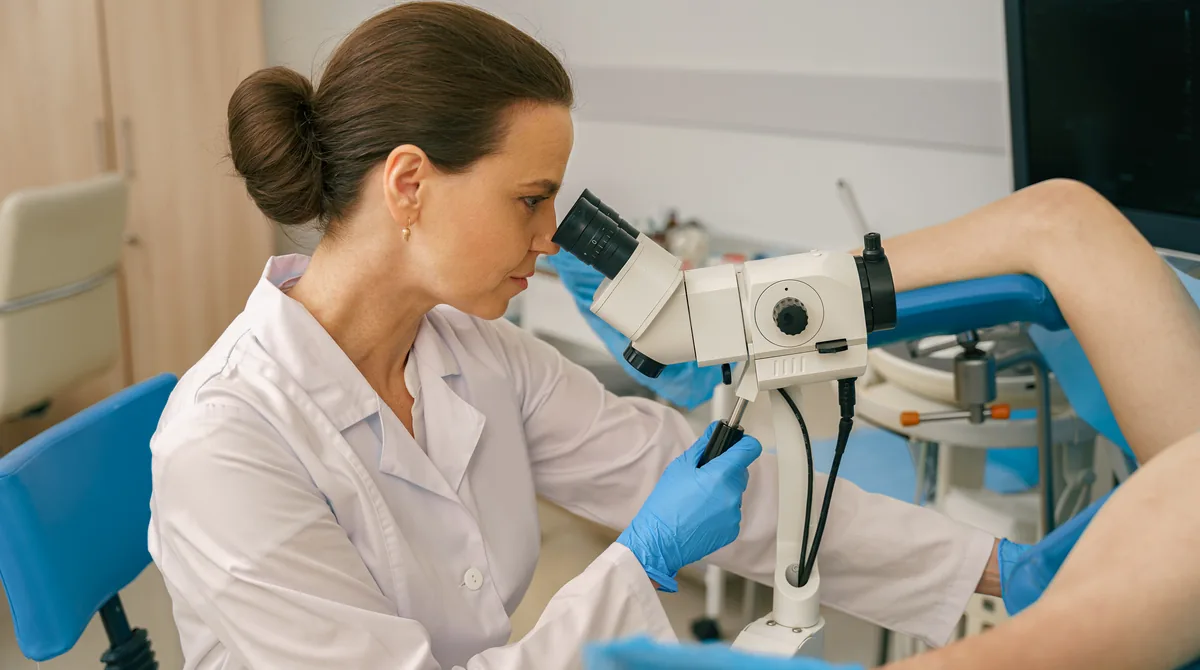
- 4. Colposcopy if the appearance is suspicious
- 5. Biopsy if needed
Colposcopy is the examination of the cervix under magnification. Acetic acid and Lugol’s solution make abnormal areas easier to see. A biopsy is taken only from the suspicious area.
The cervical pathway: five steps from examination to biopsy
Loading…
Treatment approaches
Ectropion:
- Observation
- Change of contraceptive
- Cautery (electrocautery) or laser
Ulcer:
- Herpes: antiviral
- Syphilis: penicillin
- CIN: LEEP or conization (based on colposcopy findings)
- Suspected cancer: referral to oncology
After treatment, intercourse, tampons and swimming pools are avoided for 2–4 weeks. A follow-up examination is scheduled.
Weeks after the procedure: intercourse, tampons and pools
Loading…
When is colposcopy needed?
- Abnormal smear or HPV result
- Recurrent bleeding after intercourse
- Suspicious cervical appearance
- An ulcer or irregular area
- Persistent symptoms
Smear and HPV results should be known before colposcopy.
Going for colposcopy: patient information card
A 2-page card explaining what happens before, during and after the procedure (PDF, A4).
Pregnancy
Ectropion is common in pregnancy and usually regresses after delivery. If there is bleeding, the cervix is assessed. Colposcopy can be performed during pregnancy; at SoftCare, no biopsy is taken during pregnancy, and if one is needed it is planned for after delivery.
Our approach at SoftCare
At SoftCare Clinic, assessment of a cervical “erosion” starts with a gynecological examination. If the ectropion looks typical and smear/HPV results are normal, observation is sufficient. If there are symptoms, cautery or laser treatment is discussed; the method is finalised after the doctor’s examination. For an ulcer or a suspicious appearance, colposcopy is planned. If infection is suspected, NAAT or serology is requested. For CIN, LEEP is performed at the clinic; if cancer is suspected, referral to oncology is arranged. In case of abnormal bleeding, a pregnancy test and ultrasound are considered.
Appointments: +90 212 241 30 10 · softcareclinic.com

References
- 1. Cleveland Clinic. Cervical Ectropion.
- 2. StatPearls. Cervical Ectropion. NCBI Bookshelf.
- 3. WebMD. Cervical Ectropion (Cervical Erosion).
- 4. North Tees and Hartlepool NHS. Cervical Ectropion patient information.
- 5. Mayo Clinic. Cervical cysts: Can they be cancerous?
- 6. ASCCP. 2019 Risk-Based Management Consensus Guidelines for Abnormal Cervical Cancer Screening Tests.
- 7. NICE Clinical Knowledge Summaries. Syphilis and Genital Herpes – Differential diagnosis.
- 8. UpToDate. Approach to the patient with genital ulcers.
- Note: Treatment options and indications for colposcopy are updated by the physician according to current guidelines. This reference list is for information only.
A citation does not mean that SoftCare wrote that text.
Medically reviewed by Op. Dr. Şükrü Sanus, Obstetrician & Gynecologist · Last medical review: