
Gynecological Exams / Tests
Nabothian Cysts

Symptoms
Most Nabothian cysts cause no symptoms. They are noticed during a routine examination or ultrasound. When they do cause symptoms:
- A mild feeling of fullness or pressure in the vagina
- Discomfort during sex (rare)
- Mild discharge
Large or numerous cysts can make a smear test or colposcopy more difficult. This is uncommon. Sudden bleeding, foul-smelling discharge or severe pain are not caused by a Nabothian cyst; another cause is looked for.
Diagnosis
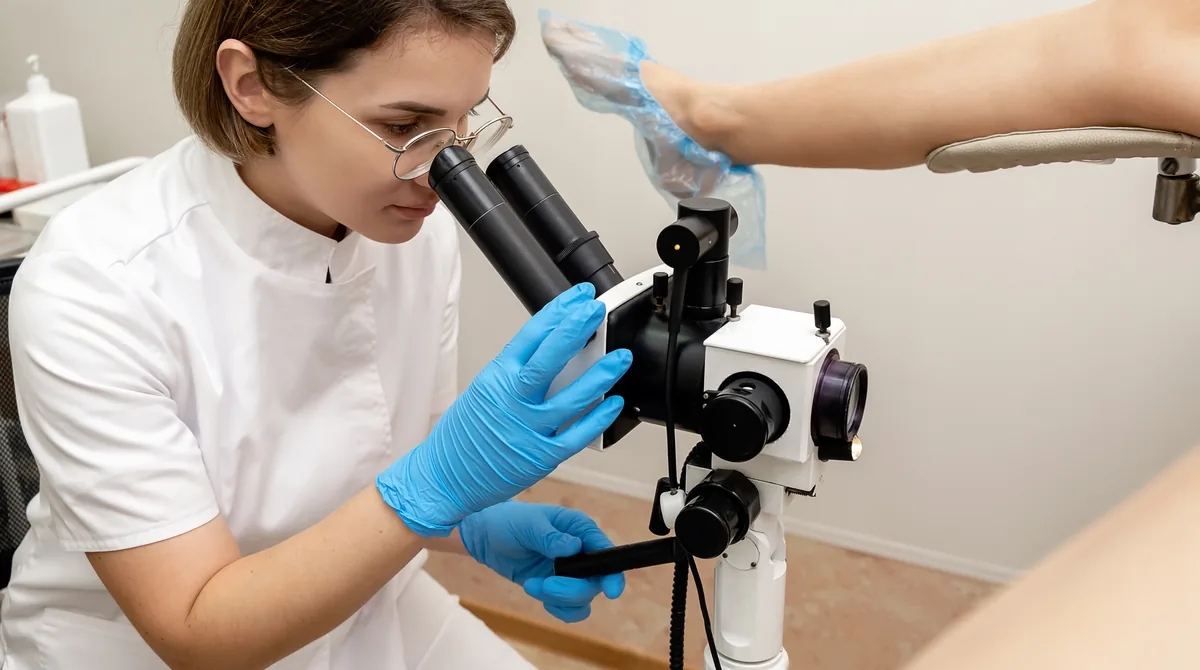
Diagnosis is usually made by gynaecological examination. Small, smooth, dome-shaped, white or yellowish bumps are seen on the cervix. On transvaginal ultrasound they appear as anechoic, thin-walled cystic structures with no blood flow.
If the appearance is suspicious (large, irregular, solid areas, deep location), colposcopy or MRI is considered. Rarely, they can be confused with mucus-producing tumours such as adenoma malignum; in that case a biopsy may be needed. Smear and HPV screening are part of routine cervical follow-up; having a cyst does not prevent screening.
Treatment
Small Nabothian cysts without symptoms need no treatment. They are monitored and routine cervical screening continues. Reasons for treatment:
- A large cyst that causes symptoms
- A cyst that prevents a smear test or colposcopy
- A suspicious appearance
In these cases, drainage, electrocautery or cryotherapy can be done in the office. The procedure is quick. The cyst may come back; this usually causes no problems.

Differential diagnosis
- Cervical polyp
- Cervical fibroid
- Adenoma malignum (a rare mucus-producing adenocarcinoma)
- Endocervical hyperplasia
Ultrasound and examination usually make the distinction. If there is doubt, colposcopy and, if needed, a biopsy are planned.
When to see a doctor
- Bleeding after sex or unexpected bleeding
- Foul-smelling discharge or fever
- A feeling of a rapidly growing mass
- New pain during sex
- An abnormal smear result
These symptoms point to a cause other than a Nabothian cyst.
Our approach at SoftCare
At SoftCare Clinic, assessment of Nabothian cysts begins with a gynaecological examination and, if needed, ultrasound. Small cysts with a typical appearance are recorded and not treated. Routine smear and HPV screening continue. If a cyst is large, causes symptoms or looks suspicious, colposcopy is planned. If needed, office drainage or referral is arranged. If there is abnormal bleeding or an abnormal smear, it is addressed together with the related pages.
Appointments: +90 212 241 30 10 · softcareclinic.com

References
- 1. Mayo Clinic. Cervical cysts: Can they be cancerous?
- 2. MedlinePlus. Nabothian cyst.
- 3. Cleveland Clinic. Nabothian Cyst.
- 4. StatPearls. Nabothian Cyst. NCBI Bookshelf.
- 5. Radiopaedia. Nabothian cyst.
- 6. Harvard Health. Nabothian cysts.
- 7. Gershenson DM, et al. Benign gynecologic lesions. In: Comprehensive Gynecology. 8th ed. Elsevier; 2022.
- Note: Decisions on monitoring and intervention are updated by the physician according to examination findings. This reference list is for information only.
Listing a source does not mean SoftCare wrote that text.
Medically reviewed by Op. Dr. Şükrü Sanus, Obstetrician & Gynecologist · Last medical review: