
Genital Warts / HPV
What Are Genital Warts
Genital warts are a viral infection caused by human papillomavirus (HPV), most commonly transmitted through sexual contact.
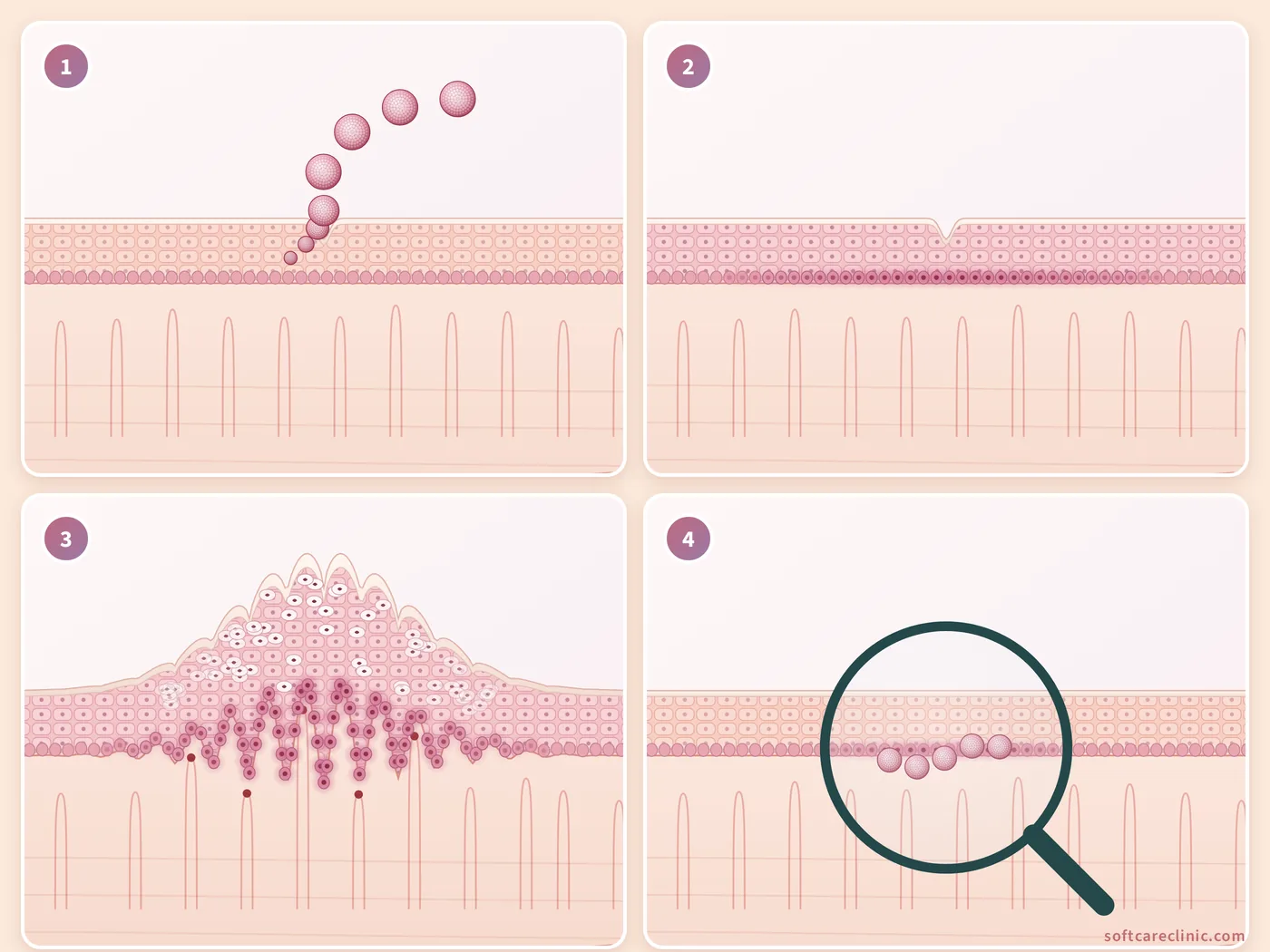
How genital warts form
Animation: HPV entering through a micro-tear in the skin, settling in the basal cells and a wart forming as the cells overgrow
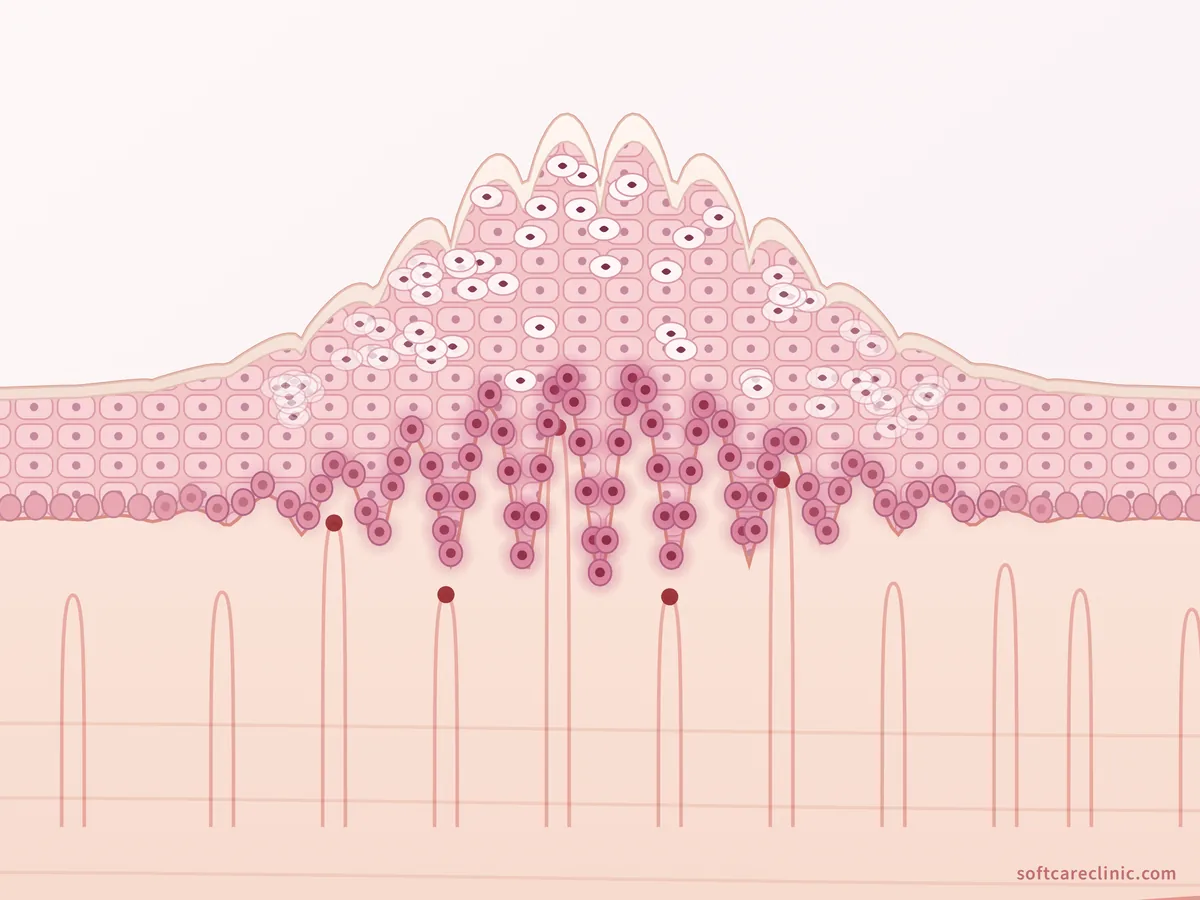
Cross-section of a genital wart
Over the past decade, this virus — which carries serious risks particularly for women — has become one of the leading causes of cervical cancer.
There are many widespread misconceptions about this condition. Some examples include the false beliefs that genital warts will go away on their own without treatment, or that they will disappear after marriage or childbirth.
Genital warts caused by the HPV virus should never be ignored without a doctor's supervision. While it is possible for warts to disappear on their own in some women with a very strong immune system, this does not mean the virus has been cleared from the body. For this reason, physician follow-up is essential.
Genital warts can be eliminated through treatment. While many treatment methods exist, it is not correct to approach every lesion with the same treatment.
Genital wart treatment and follow-up
Animation: freezing the wart (cryotherapy), checking for virus remaining in the tissue, then follow-up with HPV vaccination, regular check-ups and gynecological examination
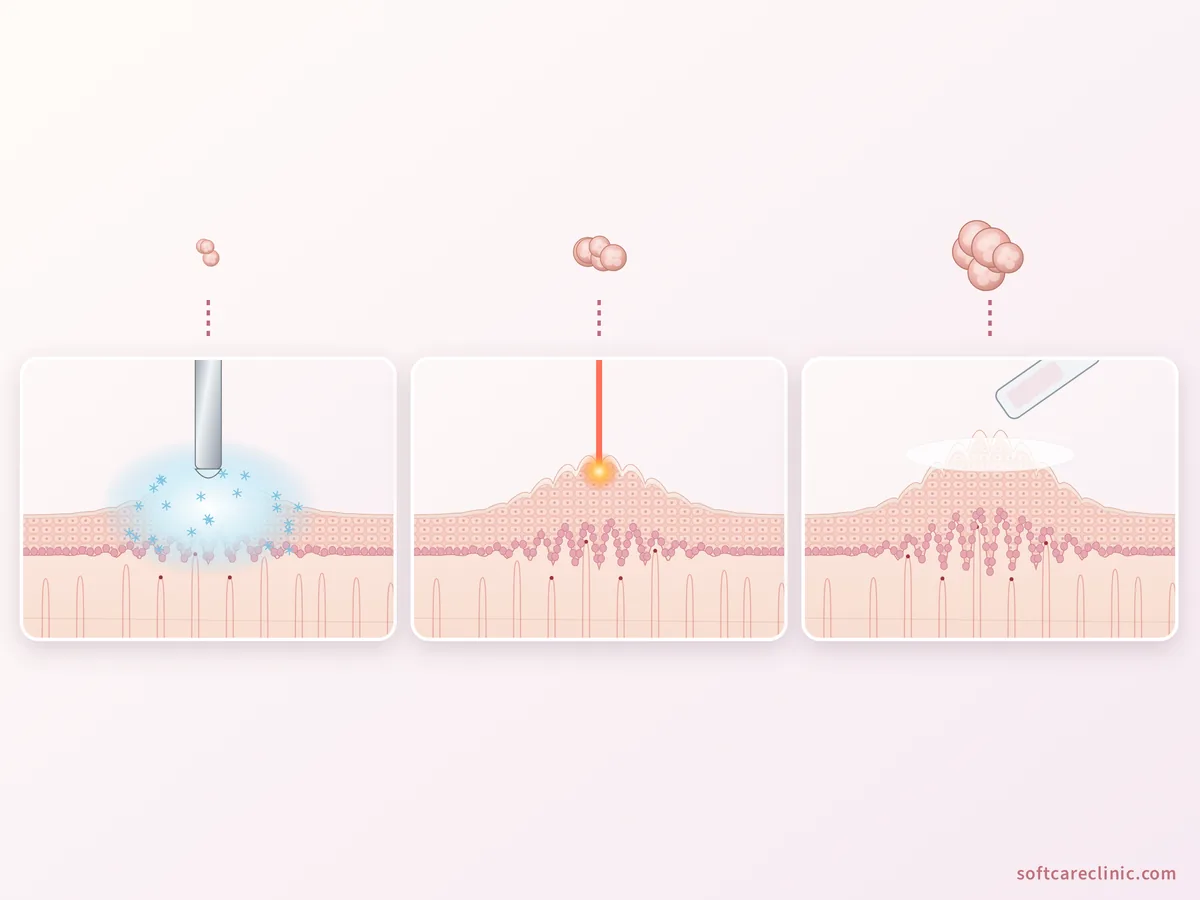
Genital wart treatment options
Call us for detailed information about genital warts and to speak with our physicians.
Infection card
Loading…
- From left to right: sample type · testing window (days) · cleared by treatment (pill) or virus persists (virus) · partner treatment · follow-up after 3 months · pregnancy screening · at the clinic or referral.
Window days are approximate; the doctor decides according to the test type.
References
- Human papillomavirus and cancer (fact sheet). World Health Organization (WHO).
- Genital warts. NHS (UK National Health Service).
- Sexually transmitted infections (STIs) (fact sheet). World Health Organization (WHO).
Medically reviewed by Op. Dr. Şükrü Sanus, Obstetrician & Gynecologist · Last medical review: